
NEW PROJECT GRANTS
In addition to supporting the Neurodegeneration Research Award (see here), we are pleased to fund also seven new additional and highly promising research projects this year:


Dr. Michael Ebner, who recently joined the Institute for Molecular Biochemistry in the Biocenter of the Medical University of Innsbruck, AUT, started his CLN3
project while he was still at the Leibniz Research Institute for Molecular Pharmacology in Berlin, GER. In Berlin, he was a member of the research group led by Prof. Volker Haucke, who this year
received the Gottfried Wilhelm Leibniz Prize 2025 of the German Research Foundation – the most important research funding award in Germany.
Michael is taking a novel approach to identify potential therapeutics for the treatment of CLN3 by screening clinically validated as well as trial pipeline compounds that (i) can restore lipid
flow from lysosomes to prevent harmful lipid accumulation, and (ii) promote repair of the lysosomal membrane to prevent cellular damage. To achieve this, an innovative “LysoSpot” assay is used.
The most promising compounds may represent strong candidates for further testing in preclinical models and clinic.
Many thanks to AstraZeneca, the Böttcher Foundation, and the Gerhard Müggenburg Foundation for their support!
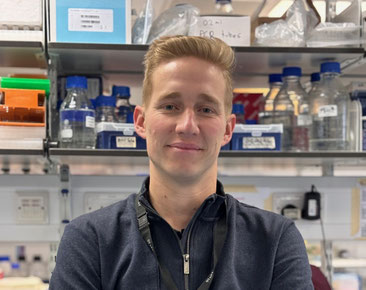
As part of the Batten Disease Global Research Initiative, we are supporting a project led by Dr. Kasparas Petkevicius, group leader at the
MRC Mitochondrial Biology Unit, University of Cambridge, UK.
His research aims to develop a novel therapy for CLN8 disease, which has two main clinical forms, a classic childhood form with disease onset between ages 2 and 7, and a milder form (Nordic
epilepsy), with an onset between age 5-10, and a more gradual cognitive and motor deterioration over several decades.
The project builds on a recent discovery from Kasparas’ group showing that the CLN8 protein functions as an ER-located enzyme in the biosynthesis of a precursor needed to make
bis(monoacylglycero)phosphate (BMP). BMP is a key lysosome-specific lipid that is essential for many lysosomal enzymes to access their substrates and conduct their function. The working
hypothesis is that the enzymatic defect of CLN8 can be bypassed by supplying BMP precursor molecules and restore BMP levels and lysosomal function. This will be tested in CLN8 cell models
including neurons, and the most promising candidate(s) will next be tested in a CLN8 mouse model. This approach could pave the way for a supplement-based therapy, that may also help to restore
BMP homeostasis deficits in other NCLs and in other diseases involving BMP-based lysosomal dysfunction.
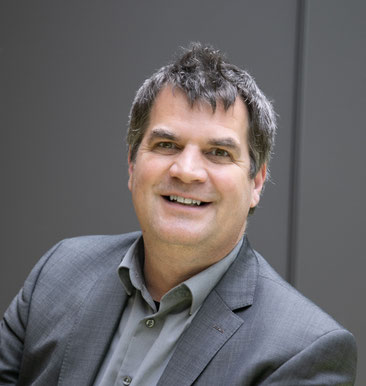
Prof. Frank Edenhofer and his team are exploring brain organoid-based ways to better understand the disease mechanisms of CLN3 and develop potential therapeutic strategies. Frank is deputy director of the Institute of Molecular Biology at the University of Innsbruck, AUT.
He uses induced pluripotent stem cell (iPSC)-derived 2D neural models and 3D brain organoids carrying CLN3 mutations to investigate early pathological changes in neuronal development and study
characteristic cellular and lysosomal abnormalities in the brain organoids. Multi-omics analyses will be applied to gain deeper insights into disease mechanisms.
The aim is to identify new targets for potential drug candidates and to test the most promising ones, paving the way towards new therapies.
We would like to express our sincere thanks to the Brotherhood of St. Christoph, St. Anton am Arlberg, Austria, for their support.
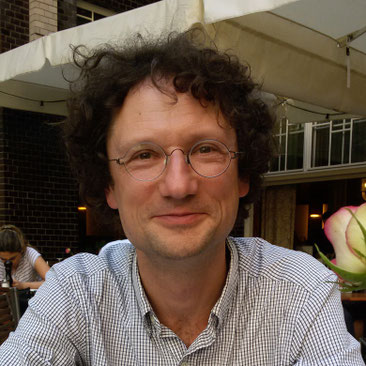
Prof. Marius Wernig of the Stem Cell Institute at Stanford University, USA, has recently shown that microglia replacement in brain ameliorates brain pathology in mouse models of
lysosomal storage disorders including Sandhoff disease and prosaposin-deficiency (nature, science). In collaboration with Prof. Monther Abu-Remaileh, also at Stanford University, Marius` team aims at resolving some key
pathogenetic questions in CLN3 disease, in particular, which cell types contribute most to the disease and whether genetic restoration in one cell type, such as microglia, which can be replaced,
would allow for cross-correction and restore e.g. neuronal lysosomal function. Also, it remains unclear whether CLN3-deficient microglia exert secondary neurotoxic effects as shown for other
lysosomal diseases. The overall goal of this project is to develop a platform that allows to address these key questions.
To this end, the team is developing a novel human CLN3 modular brain cell model referred to as iAssembloids, that encapsulate the brain`s cellular complexity (neurons, astrocytes, microglia) and
allows experimental access to each individual cell type.
This will allow better understanding of disease-related mechanisms and testing of potential new therapeutic approaches.
We thank our partner Stichting Beat Batten! (NL) for supporting this important project!
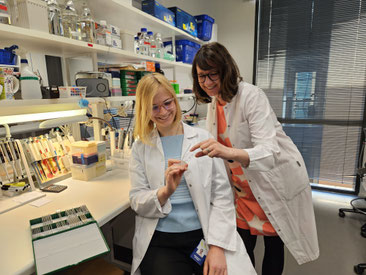
The goal of the new project led by Prof. Reetta Hinttala, Research Unit of Clinical Medicine, Faculty of Medicine, University of Oulu, Finland, is to use the newly developed
CLN8-R24G mouse model of Nordic epilepsy to study the composition of lysosomal phospholipids – in particular BMPs – and to investigate disease-related changes in lysosomal lipid metabolism and
how these changes are linked to early-onset, epilepsy-associated neurodegeneration. Tissue samples and cells from the mouse model will be analyzed by mass spectrometry in collaboration with Dr.
Petkevicius’ lab (see above) and CLN8 patient PBMC lysosomes in collaboration with the lab of Dr. Esther Sammler (Dundee, UK) and Monther Abu-Remaileh (Stanford, USA).
What makes us especially proud: Reetta’s colleague Jessica Müller-Niva once participated as a high school student in our NCL school project in Hamburg, Germany – and now, 14
years later, she is conducting her doctoral research on NCL. A true full circle moment!
We would like to thank our sponsors, the Bijou Brigitte Foundation, the Lions Club Ahrensburg, and numerous individual donors for their support.
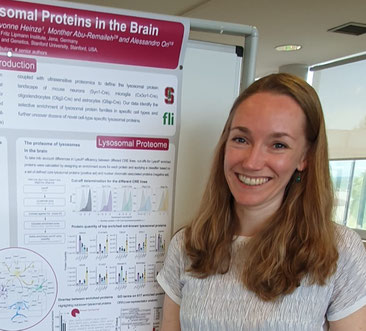
As a follow-up of her project, which we already supported, Dr. Julia Heiby and team aim to screen promising
therapeutic compounds to evaluate their efficacy in restoring lysosomal proteome function to near wild-type levels. To this end she uses an ARPE-19 CLN3 KO retinal epithelial cell model generated
and characterized earlier by Wünkhaus et al., 2024 in
another project sponsored by the NCL Foundation. Recent literature highlights several compounds as potential candidates, each demonstrating an ability to either favourably alter lipid metabolism
and/or neuroinflammation. The goal is to systematically evaluate one or more compounds for their capacity to correct lysosomal proteome alterations seen in CLN3 cells. Early retinal degeneration
severely impacts children with Batten disease and RPE dysfunction has meanwhile been well documented (nature, iovs, biorxiv). Insights derived from the ARPE-19 model may also have broader implications for other retinal degenerative disorders
such as AMD. By understanding lysosomal dysregulation at a molecular level and testing promising compounds, the research may pave the way toward novel treatment strategies that could benefit a
wider patient population affected by retinal degeneration.
We would like to thank the Rühling Foundation for its support!
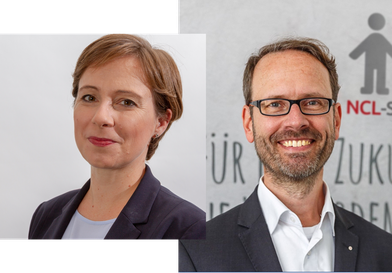
Early (i.e newborn) detection of CLN2 disease is the goal of a new pilot project at the University Medical Center
Hamburg-Eppendorf (UKE), GER. The project is led by Prof. Angela Schulz, Department of Pediatrics and Adolescent Medicine at UKE, and coordinated by Dr. Frank Stehr, CEO of the
NCL Foundation.
Studies have shown that treatment of CLN2 disease with enzyme replacement therapy is best done very early, when it can significantly delay onset, slow and potentially even halt disease
progression. However, CLN2 disease is diagnosed generally after the onset of first symptoms. The pilot project at the UKE aims to establish a newborn screening program for CLN2 disease.
Over the next three years, at least 300,000 newborns from various regions of Germany will be tested for CLN2 with the goal to allow the earliest possible access to therapy.
The project also focuses on CLN3 disease with the objective to identify specific biomarkers to help assess the efficacy of new therapeutic approaches in the future.
Funding for the project includes the acquisition of a dedicated tandem mass spectrometer to support the newborn screening effort as well as the CLN3 biomarkers program. Necessary laboratory adaptations are also financially supported.
For early detection of CLN2, a newly developed diagnostic method is being implemented that measures the activity of the enzyme TPP1 using tandem mass spectrometry and dried blood spot samples collected for the purpose of routine newborn screening.
For biomarker analysis, the Tagless LysoIP method developed by Saarela, Abu-Remaileh, Sammler and colleagues is used to isolate lysosomes from fresh blood samples of NCL patients. The lysosomal contents are subsequently analyzed using tandem mass spectrometry.
A heartfelt thank you goes to Bild hilft e.V. “Ein Herz für Kinder” for supporting this forward-looking project!
We wish all research teams every success and eagerly look forward to their results!
NCL-Stiftung
Holstenwall 10 · 20355 Hamburg
Tel. +49 (40) 69 666 74-0
Fax +49 (40) 69 666 74-69

SPENDENKONTO
bei der Hamburger Sparkasse
IBAN: DE50 2005 0550 1059 2230 30
BIC: HASPDEHHXXX
Bleiben Sie in Kontakt mit uns:


Zur besseren Lesbarkeit wird auf dieser Website teilweise auf genderneutrale Doppelungen verzichtet.
Alle Formulierungen gelten gleichermaßen für alle Geschlechter.
Wir sind Mitglied:


